

Ramzi Musallam's Impact on Education
Discover how Ramzi Musallam's creative teaching methods and insights influence modern education. Learn from his talks and writings 📚✨
Edited By
Ethan Parker
The Federal Funds Rate is an interest rate set by the United States Federal Reserve (the Fed) that influences liquidity in the banking system. Simply put, it is the rate at which banks lend unsecured overnight funds to each other. Although it sounds technical, this rate impacts markets globally, including Indian investors and businesses.
The Fed adjusts this rate to control inflation and economic growth. When the economy overheats and inflation rises, the Fed may raise the rate. Higher rates mean borrowing becomes expensive, slowing spending and investment. Conversely, lowering the rate makes credit cheaper, encouraging growth.
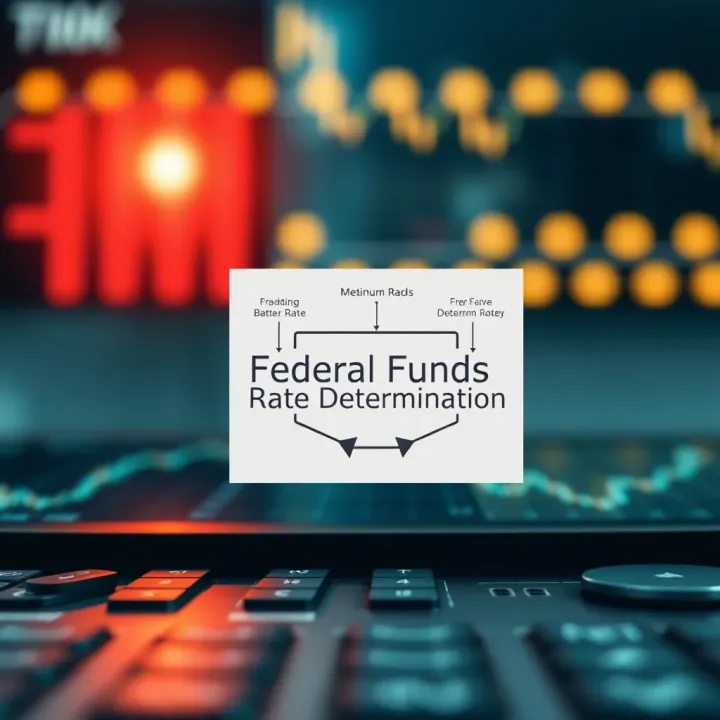
The Fed Funds Rate acts like a steering wheel for financial markets, guiding economic activity through changes in borrowing costs.
The rate is not fixed but influenced by the Fed’s Open Market Operations — buying or selling government securities to adjust the money supply. The Federal Open Market Committee (FOMC) meets regularly to assess economic data such as inflation, employment, and GDP growth, then sets a target range for the rate.
Banks attempt to meet this target by borrowing or lending excess reserves overnight. The actual rate fluctuates slightly within this range depending on demand and supply.
Though the Fed Funds Rate is a US benchmark, today's globalised markets mean changes resonate worldwide:
Currency Impact: A rise in the Fed rate can strengthen the US dollar against the rupee, making imports costlier and affecting inflation in India.
Capital Flows: Higher returns in the US may prompt Indian foreign investors to withdraw capital from Indian markets, impacting equities and bonds.
Borrowing Costs: Indian companies with dollar loans find servicing costlier when the Fed rate increases, potentially slowing expansion plans.
Global Trade: Changes in US demand due to rate shifts affect Indian exports, especially sectors like IT and textiles.
Understanding the Fed Funds Rate helps traders and analysts forecast market moves, manage risk, and make informed investment decisions. Businesses can plan finances better by anticipating foreign exchange and credit cost changes.
Getting acquainted with how the Fed manages this key rate provides valuable insight into the broader economic environment influencing India and beyond.
The Fed Funds Rate is a benchmark interest rate set by the US Federal Reserve that banks use to lend to each other overnight. It plays a central role in the US monetary policy because it directly influences short-term interest rates, affecting lending, borrowing, and overall economic activity. Understanding what this rate represents helps traders, investors, and financial analysts gauge the economic environment and anticipate shifts in financial markets.
The Fed Funds Rate is the tool the Federal Reserve uses to guide economic conditions. By adjusting this rate, the Fed aims to balance inflation control with fostering economic growth. For example, if inflation goes beyond the Fed’s comfort zone, it might raise the rate to make borrowing costlier, slowing spending and cooling price rises. Conversely, lowering the rate makes borrowing cheaper, encouraging investment and job creation.
This mechanism helps maintain price stability and supports sustainable growth. For investors, following Fed announcements about the funds rate is essential since these changes ripple across financial markets, affecting stock valuations, bond yields, and foreign exchange rates.
The Fed Funds Rate differs from consumer interest rates like mortgage or personal loan rates. While it influences them indirectly, it is the rate banks charge one another for unsecured overnight loans of reserves. Consumer rates factor in additional risks and profit margins and are generally higher.
Also, unlike the repo rate set by the Reserve Bank of India (RBI), the Fed Funds Rate targets interbank lending in the US landscape. This distinction matters when analysing cross-border capital flows or currency movements, especially for markets like India that respond to changes in US monetary policy.
Banks are required to maintain reserves — a certain amount of funds kept aside as per regulatory requirements. When a bank has excess reserves, it lends the surplus to other banks needing short-term funds, usually overnight. The interest rate charged here is the Fed Funds Rate.
This overnight lending ensures liquidity in the banking system, enabling institutions to meet daily operations without interruption. For instance, if Bank A ends the day with ₹5 crore more than required, it can lend to Bank B, which might be short by ₹2 crore, charging interest at or near the Fed Funds Rate.

The Fed Funds Rate affects how banks manage reserves. A low Fed Funds Rate encourages banks to hold fewer reserves since borrowing costs are cheap, leading to more lending and economic activity. A higher rate discourages borrowing, prompting banks to keep more reserves, tightening liquidity.
This balance is crucial. Since reserves impact banks' ability to extend credit to consumers and businesses, shifts in the Fed Funds Rate indirectly affect credit availability and economic momentum. Understanding this helps investors predict credit cycles and market liquidity conditions.
The Fed Funds Rate is, quite simply, the heartbeat of the US financial system, influencing everything from bank lending to investor sentiment worldwide.
This understanding forms the foundation for grasping how the Fed Funds Rate steers broader economic and market movements, a key step for anyone tracking global financial trends.
The Federal Reserve's process in setting the Fed Funds Rate is central for traders, investors, and financial analysts seeking to anticipate market trends. Understanding how this rate is determined offers insight into the US economy's directional signals, which in turn influences global markets, including India's.
The Federal Open Market Committee (FOMC) meets typically eight times a year to review economic and financial conditions. These meetings involve detailed discussions on inflation, employment, and growth prospects. After thorough analysis, the FOMC announces a target range for the Fed Funds Rate, signalling their outlook on the economic health.
This decision process is not a mere formality but a well-structured, data-driven exercise. For instance, during the 2020 pandemic, the FOMC cut rates aggressively to almost zero to support the economy. Such deliberate moves guide market expectations and shape lending, borrowing, and investment patterns.
To hit their target rate, the Fed uses several tools. The primary mechanism is open market operations where the Fed buys or sells government securities to influence liquidity. For example, buying securities pumps cash into banks, lowering short-term rates. Besides, the Fed can adjust the interest on excess reserves (IOER) banks hold, directly affecting the rate at which banks lend to each other overnight.
The Fed closely watches inflation data, typically gauged by the Consumer Price Index (CPI) and Personal Consumption Expenditures (PCE). If inflation runs above the 2% target, the Fed might raise rates to prevent the economy from overheating. Conversely, low inflation can encourage rate cuts to stimulate demand. For investors, inflation readings hint at future Fed actions which affect bond yields and stock valuations.
Employment figures remain a vital input. The Fed prefers a strong labour market but worries about wage inflation pushing overall prices up. A low unemployment rate, like India’s current scenario where the formal sector shows steady job gains, can prompt rate hikes. This is why analysts watch monthly US Non-Farm Payroll data closely as it helps forecast Fed moves.
GDP growth rates give the broader economic picture. When growth is robust, the Fed may tighten monetary policy. During economic slowdowns, the Fed tends to ease rates to encourage spending and investment. For example, the 2008 financial crisis saw the Fed slashing rates to revive growth, a move that had ripple effects worldwide.
Lastly, global economic trends influence decisions too. Events like the China-US trade tensions or Eurozone slowdowns create uncertainty. The Fed adjusts its stance partly based on these headwinds or tailwinds, impacting capital flows globally. Indian markets, sensitive to foreign investment, react to such shifts, making it essential for local investors to follow these international signals.
The Fed’s rate-setting is a complex exercise balancing domestic performance and global influences, providing traders and investors with critical clues about monetary direction.
Adjustments in the Federal Funds Rate have a direct influence on the broader economy. For traders, investors, and financial analysts, understanding these changes helps in anticipating market shifts and economic trends. The Fed's decisions ripple through inflation levels, economic growth, and borrowing costs, shaping financial conditions both locally and globally.
Controlling inflation: The Fed raises the funds rate mainly to rein in inflation. When the economy heats up too much, prices for goods and services can rise rapidly, eroding purchasing power. By increasing the interest rate, borrowing becomes more expensive, which slows spending and investment. This reduction in demand tends to ease upward pressure on prices. For instance, a rise in the funds rate during early 2022 was aimed at controlling inflation that had reached a four-decade high in the US. If inflation runs unchecked, it can lead to unpredictable price movements, unsettling markets and consumers alike.
Stimulating or cooling down growth: Conversely, lowering the Fed Funds Rate helps stimulate economic activity during downturns. Cheaper borrowing encourages businesses to invest and consumers to spend, which supports job creation and growth. For example, during the 2008 financial crisis and the 2020 pandemic, the Fed slashed rates near zero to push the economy towards recovery. However, the same tool can cool overheated growth to prevent bubbles or unsustainable expansions. This balancing act is vital to maintain steady, healthy economic progress without causing sharp booms and busts.
Mortgage rates and personal loans: Changes in the Fed Funds Rate affect the rates banks offer consumers on mortgages, auto loans, and personal credit. When the Fed hikes the rate, banks' cost of funds rises, so they pass this on to borrowers through higher home loan EMIs and personal loan interest. For example, a 0.25% interest rate increase in the US can lead to a similar rise in variable home loan rates, tightening affordability for many. This shift influences housing market activity and consumer spending decisions.
Corporate borrowing and investment: For businesses, particularly those seeking funds through loans or bonds, the Fed Funds Rate movement sets the benchmark cost. If borrowing costs climb, companies may delay expansions, hiring, or new projects, affecting economic growth. On the other hand, lower rates can fuel corporate investments and capital spending. A multinational firm, for instance, might reconsider a new manufacturing plant if loan interest rates increase significantly, impacting job creation and supply chains. Understanding these dynamics helps investors assess corporate risk and growth potential based on monetary policy changes.
The Fed Funds Rate acts as a thermostat for the economy; knowing how it influences inflation, growth, and borrowing costs empowers you to make informed financial decisions in an ever-changing market.
The Fed Funds Rate significantly shapes global financial markets, affecting investment decisions and market behaviour. Traders and investors track its movements closely, as changes often signal shifts in funding costs, liquidity, and economic outlook. Understanding how this rate influences stock, bond, and currency markets enables more informed portfolio management and risk assessment.
Investor sentiment plays a crucial role when the Fed Funds Rate changes. For instance, a hike in the rate generally signals the Federal Reserve's intention to cool inflation, which can dampen enthusiasm for riskier assets like stocks. Investors may sell shares anticipating slower corporate earnings growth. Conversely, a cut often boosts confidence, pushing stock prices up as borrowing costs fall and spending is expected to rise. This dynamic became evident after the 2020 rate cuts, where markets rallied sharply, reflecting optimism about economic recovery.
On the other hand, bond yields and prices move inversely to each other in response to rate changes. When the Fed raises the funds rate, bond yields rise to stay competitive, which drives bond prices down. Investors holding bonds with lower yields may see their market value drop. Conversely, rate cuts lower yields, making existing bonds with higher rates more attractive and pushing their prices up. For example, during 2019 rate cuts, government bond prices surged, reflecting investors’ search for safer returns amid uncertainty.
The US dollar strength often correlates with changes in the Fed Funds Rate. A higher rate attracts foreign investors seeking better returns, increasing demand for dollars. This drives up the currency’s value against others. Strong dollar periods sometimes see capital outflows from emerging markets as funds chase US returns. Traders tracking USD movements use Fed rate changes as a key signal for currency positioning.
For emerging markets like India, Fed rate shifts carry tangible risks and opportunities. A rising dollar can lead to capital outflows from Indian markets, causing rupee depreciation and higher import costs, which may stoke domestic inflation. The Reserve Bank of India (RBI) might then intervene to stabilise the currency or adjust its own policy rates. However, rate cuts that weaken the dollar often ease pressure on rupee and encourage foreign direct investment inflows. India's financial stakeholders must monitor these global ripples closely to manage exchange rate volatility and capital flow fluctuations.
Changes in the Fed Funds Rate ripple far beyond US borders, influencing markets and monetary policies across countries, including India. Staying alert to these signals is essential for strategic financial decisions.
The Fed Funds Rate directly affects India's financial markets and economic policies due to the close ties between global and Indian economies. Since the US dollar serves as a global reserve currency, changes in the Fed's rate can trigger capital movements, exchange rate shifts, and influence RBI’s monetary decisions. Indian traders, investors, and policymakers keep a close eye on these developments to manage risks and opportunities effectively.
When the Fed raises or lowers the Fed Funds Rate, international investors reassess their portfolios. A hike in the US rate typically attracts global capital towards dollar-denominated assets, leading to outflows from emerging markets like India. For example, after the Fed’s rate hike in 2022, India saw increased foreign portfolio investor (FPI) selling pressure on stocks and bonds, which put strain on market liquidity.
On the flip side, a cut in the Fed rate can bring back capital as investors seek higher returns in emerging markets. This inflow often boosts Indian equity prices and strengthens liquidity in corporate bond markets. Thus, the Fed's rate decisions have immediate practical relevance for Indian market participants, impacting investment strategies and price movements.
The Fed Funds Rate also influences the value of the Indian rupee (₹). When the US rate rises, the dollar gains strength, often causing the rupee to weaken against the dollar. This rise in exchange rate volatility can increase costs for Indian importers who rely on dollar payments, such as oil companies or electronics manufacturers.
Conversely, a lower US rate might ease pressure on the rupee, stabilising it and reducing currency risk for Indian exporters and foreign investors. For Indian businesses with forex exposure, anticipating these fluctuations is crucial for hedging decisions, cash flow management, and pricing strategies.
The Reserve Bank of India (RBI) monitors the Fed Funds Rate closely to decide its own policy stance. While RBI’s monetary policy targets domestic inflation and growth, it must consider external factors like US interest rates to maintain foreign exchange stability.
At times, RBI aligns its policy rate moves with the Fed to curb capital outflows and support the rupee. For instance, when the Fed hiked rates sharply in 2018, RBI also raised its repo rate to temper capital flight and inflation risks. However, RBI may diverge when domestic conditions require a different approach, such as prioritising growth over external pressures.
Fed rate changes affect global liquidity and commodity prices, which in turn influence India’s inflation and growth prospects. A high Fed rate often tightens global liquidity, increasing borrowing costs worldwide and dampening demand for Indian exports.
RBI uses its monetary tools—like repo rate and cash reserve ratio—to manage inflation while supporting economic growth amid these external challenges. For example, if the Fed rate-driven dollar strength pushes up fuel prices, RBI may tighten liquidity to manage imported inflation while ensuring credit availability for businesses.
Understanding the Fed Funds Rate’s impact helps Indian investors and policymakers navigate the interconnected global economy, balancing domestic needs with international shifts.
Discover how Ramzi Musallam's creative teaching methods and insights influence modern education. Learn from his talks and writings 📚✨

Discover how Robert Soros shapes finance & philanthropy with smart leadership and investment moves, continuing his family’s impactful legacy. 💼📈🤝

Explore Rakesh Bansal's journey, achievements, and key contributions 🌟. Discover his impact on the community and recognition in his field in India 🇮🇳.

Explore Reliance's Target Tomorrow initiative 🌟, its strategic goals, tech & sustainability focus, and impact on markets & investors in India 🇮🇳.
Based on 11 reviews