

Understanding Ethereum: A Clear Overview
Explore Ethereum's blockchain tech, smart contracts, DApps, real-world use cases, challenges & future prospects, tailored for Indian readers curious about crypto 🔗📱
Edited By
Ethan Parker
Derivative trading means buying and selling financial contracts whose value depends on an underlying asset. These assets can be stocks, commodities like gold or oil, currencies such as the US dollar or rupee, or market indices like the Nifty 50.
At its core, derivatives allow traders and investors to manage risk or speculate without directly owning the asset. For example, a farmer growing wheat may use derivatives to lock in a price before harvest, protecting against a price drop. Similarly, an investor expecting the rupee to weaken against the dollar might use currency derivatives to hedge their exposure.

In India, derivative markets have grown rapidly, especially on exchanges like the National Stock Exchange (NSE) and Bombay Stock Exchange (BSE). Common derivative instruments include:
Futures: Agreements to buy or sell an asset at a specified price on a future date.
Options: Contracts giving the right, but not the obligation, to buy or sell at a set price within a time frame.
Swaps: Deals to exchange cash flows or financial instruments between parties.
These tools serve varied purposes:
Hedging risks related to price fluctuations.
Speculating to potentially earn profits by predicting market movements.
Arbitrage opportunities by exploiting price differences across markets.
Understanding how these contracts work is critical. Futures require commitment to transact on the expiry date, exposing traders to potential losses if the market moves unfavourably. Options provide more flexibility but come with premium costs. Swaps tend to be more complex and are common among institutional players.
Derivative trading isn’t just for experienced investors. With the right knowledge, even traders new to the market can use derivatives strategically to enhance their portfolios or manage risks.
In the following sections, we will explore the functioning of derivative markets, typical trading strategies used by Indian investors, regulatory frameworks, and the risks involved. This foundation will help you approach derivative trading confidently, avoiding pitfalls and making informed decisions.
Derivative trading represents a vital part of the modern financial world, especially for traders and investors looking to manage risks and enhance returns. In the Indian markets, derivatives have grown rapidly, with instruments like futures and options becoming common tools. Understanding the basics is essential if you want to navigate these markets effectively and use derivatives to protect your portfolio or speculate wisely.
Derivatives are financial contracts whose value depends on an underlying asset such as stocks, commodities, currencies, or indices. Think of them as agreements that derive their price from something else. For example, a futures contract on crude oil is not crude itself but an agreement to buy or sell crude at a future date.
In practical terms, derivatives let traders and investors take positions without owning the actual asset, which allows flexibility and leverage. This is crucial in markets like India, where holding large quantities of commodities or shares may not be feasible or desirable for everyone.
Unlike the underlying assets, derivatives do not represent ownership of a physical good or security. Instead, they are contracts whose purpose is often to transfer risk or speculate on price movements. For instance, holding shares of Reliance Industries means you own a part of the company, whereas buying a call option on Reliance shares only gives you the right to buy those shares at a set price, if you choose.
The practical relevance is that derivatives often require less capital upfront but carry different risk profiles and complexities. They can magnify both gains and losses, so understanding these differences is key before trading.
One primary use of derivatives is hedging. Businesses and investors use them to protect against adverse price changes. For example, a farmer expecting to sell wheat in three months might use futures contracts to lock in a price now, securing revenue despite potential price drops.
In the Indian context, where monsoon uncertainties can impact agriculture, such hedging tools are valuable to reduce income volatility. Similarly, importers and exporters hedge currency risk through currency derivatives to avoid losses due to rupee fluctuations.
Derivatives also offer chances to speculate on market direction without owning the underlying asset. Traders can take positions betting on price rise or fall through options and futures, often using leverage to amplify returns.
For example, a trader expecting Nifty to rise might buy call options rather than buying stocks directly, paying smaller premium but risking the premium paid. While the potential returns can be higher, losses are also possible, demanding careful strategy and risk management.
Derivatives contribute to market efficiency by aiding price discovery — the process where market prices reflect all available information. Since derivatives markets often react faster to news and supply-demand shifts, they help set more accurate prices for the underlying assets.
On top of that, derivative markets increase liquidity by attracting more participants and enabling faster transactions. This helps traders enter and exit positions more easily, especially in assets that might otherwise be less liquid in India’s varied market landscape.
Understanding derivatives’ nature and purpose sets the foundation for using them effectively, whether for risk management or seizing market opportunities. This clarity helps avoid pitfalls and leverage their benefits wisely.
Derivatives come in different forms, each serving distinct purposes for traders and investors. Understanding these common types helps in selecting the right instruments for hedging, speculation, or arbitrage. These derivatives derive their value from underlying assets like stocks, currencies, or commodities, so their pricing and risk depend on those assets’ fluctuations.
Definition and features: Futures contracts are agreements to buy or sell an asset at a predetermined price on a specific future date. They are standardised and traded on exchanges, making them highly transparent and liquid. Futures help traders lock in prices, manage risk, or speculate on price movements without owning the underlying asset.
They require a margin deposit and are marked to market daily, meaning gains and losses are settled daily, reducing counterparty risk. Futures are widely used for commodities, indices, currencies, and interest rates.
Examples in Indian markets: On platforms like the National Stock Exchange (NSE), futures contracts are popular on the Nifty 50 index and stocks such as Reliance Industries or Infosys. Commodity futures on items like gold, crude oil, and cotton help producers and consumers manage price volatility. For example, a farmer growing cotton might sell cotton futures to lock in a selling price before harvest.
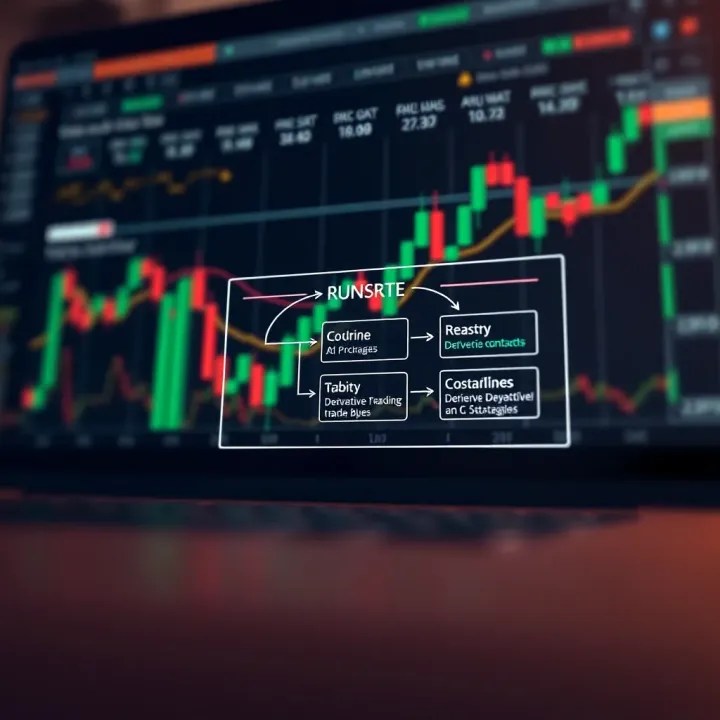
Call and put options explained: Options give the buyer the right, but not the obligation, to buy (call option) or sell (put option) the underlying asset at a fixed price before the expiry date. Buyers pay a premium for this right.
This asymmetric payoff allows traders to limit losses (premium paid) while having unlimited profit potential on calls or protective risk management via puts.
How options trading works: Traders can buy or sell options on shares, indices, or commodities through recognised exchanges like NSE. Selling options (writing) involves an obligation if exercised by the buyer, demanding margin and risk control.
Options enable strategies like hedging a portfolio against declines with puts or speculating on expected movements with calls. For instance, an investor fearing a Nifty dip might buy put options to offset losses without selling underlying holdings.
Interest rate swaps: These allow two parties to exchange interest payment obligations, usually swapping fixed and floating rates. Indian companies use these to manage borrowing costs amid changing RBI policy rates or market conditions, balancing fixed repayments or benefiting from rate drops.
Currency swaps: Entities engage in currency swaps to exchange principal and interest payments in different currencies. This is common for Indian exporters or multinational companies hedging foreign exchange risk or accessing foreign loans efficiently.
Less common derivatives in trading: These include credit default swaps (insuring against debt default), weather derivatives (hedging crop or energy risks), and exotic options. These are niche and mostly used by institutional investors or businesses with specialised risks.
Understanding derivatives beyond just futures and options can provide strategic advantages, especially when managing complex risks or seeking customised exposures.
Each derivative type fits varied needs and market conditions, so knowing their specifics is vital before trading or investing. This clarity helps in crafting well-informed strategies and managing risks effectively.
Understanding how derivative markets operate is vital for anyone planning to trade these instruments. These markets create a structured platform where buyers and sellers can meet, helping them manage price risks or take speculative positions more easily. The functionality depends on several factors, including the trading venue, clearing mechanisms, and margin systems, all of which impact liquidity, transparency, and risk.
Exchange-traded derivatives trade on regulated platforms like the National Stock Exchange (NSE) or the Bombay Stock Exchange (BSE). They are standardised contracts, meaning all terms such as quantity, expiry dates, and settlement procedures are predefined. This standardisation simplifies trading and offers a high degree of transparency. For instance, Nifty futures traded on NSE come with fixed contract sizes and expiry cycles, making them accessible to a wide range of traders.
In contrast, over-the-counter (OTC) derivatives are customised contracts negotiated directly between two parties without an exchange. They allow flexibility in contract terms suited to specific hedging or investment needs. For example, a corporate entity may enter an OTC interest rate swap tailored to its loan schedule. However, OTC trades involve higher counterparty risk since they lack a centralised clearing mechanism.
When it comes to advantages, exchange-traded derivatives offer strong regulatory oversight, lower counterparty risk, and high liquidity. This makes them ideal for retail traders and institutional investors alike. On the flip side, the standardisation limits flexibility; sometimes a trader may need contract structures not available on the exchange.
OTC derivatives provide that customisation freedom, enabling sophisticated risk management strategies not possible with standard contracts. But these advantages come with downsides, particularly less transparency and greater default risk. In India, regulators such as SEBI closely monitor exchange markets, whereas OTC segments are subject to fewer rules, so investors should be cautious.
Clearing houses serve as the backbone of exchange-traded derivative markets. They act as intermediaries between buyers and sellers, guaranteeing contract settlement even if one party defaults. This reduces counterparty risk and boosts market confidence. For example, the Clearing Corporation of India Limited (CCIL) plays this role in interest rate derivatives.
Margins are collateral deposits traders must put up to cover potential losses. This system helps control credit risk and ensures participants maintain sufficient funds. Typically, you’ll find initial margin required before opening a position and variation margin to cover day-to-day price movements. In NSE’s futures and options segment, margin amounts are computed based on risk metrics like volatility.
The clearing and settlement process revolves around daily marking to market, where gains and losses get adjusted each day. This tightens risks and avoids major defaults. After that, final settlement occurs on contract expiry or on closing the position earlier. This process is swift and transparent on regulated exchanges, offering traders clarity and peace of mind.
Margin requirements and clearing systems provide crucial safeguards, preventing a domino effect of failures and keeping derivative markets stable and reliable.
By knowing how these mechanisms work, you can better plan your trades, anticipate funding requirements, and avoid unexpected setbacks in derivative markets.
Derivative trading strategies help investors manage risk, speculate for profits, or take advantage of market inefficiencies. These strategies bring flexibility and control that simple buying or selling of assets might not provide. Understanding how to apply derivatives correctly can improve portfolio robustness or boost returns, but they require careful planning and market knowledge.
Protecting investment portfolios involves using derivatives to reduce potential losses, especially when markets are volatile. For example, if you own shares of a company and worry about a short-term fall, you might buy put options on those shares. This gives the right to sell at a set price, limiting downside risk. Similarly, farmers often use futures contracts to lock in prices of crops ahead of harvest, guarding against price drops.
Using derivatives to lock prices is a practical tool for businesses and individuals exposed to price swings in commodities or currencies. Consider an Indian exporter expecting payment in dollars after six months; they can use a currency forward contract to fix the exchange rate today, avoiding losses from rupee appreciation. This certainty in cash flow helps with budgeting and financial planning.
Taking directional bets means traders use derivatives to profit from expected price movements. For instance, if someone predicts the Nifty 50 will rise, they might buy call options to benefit from the upside with limited upfront investment. Unlike buying shares itself, options often require less capital, but losses are capped to the premium paid.
Leverage and its impact comes into play because derivatives let traders control a large value of the underlying asset with a smaller capital outlay. While this can magnify gains, it also increases losses. A small adverse move in the underlying can wipe out an investor’s margin, leading to forced liquidation. Indian exchanges like NSE impose strict margin requirements to contain risk, but traders must understand the dangers leverage poses.
Risk-free profit methods use price discrepancies between related markets or instruments to lock in profits without exposure to market moves. For example, if a futures contract trades below the cost implied by the spot price and interest rates, traders can simultaneously buy the asset and sell the futures, earning a guaranteed return when contracts converge.
Examples in Indian derivative markets include arbitrage between spot and futures prices of Sensex or Nifty stocks. Traders monitor these gaps closely, taking advantage when futures prices diverge significantly from their fair value. Such strategies require timely execution and low transaction costs to be profitable.
Derivative trading strategies range from protecting portfolios against losses to seeking profit in rising or falling markets. Indian markets provide multiple avenues but introduce challenges like margin rules and liquidity that investors must navigate carefully.
By mastering these strategies, traders can align derivative use with their goals and risk appetite while handling market complexity thoughtfully.
Derivative trading offers many opportunities but comes with its share of risks that every trader and investor should know. Understanding these risks helps you manage your exposure effectively and avoid unexpected losses.
Volatility effects: Derivatives are closely linked to the price movements of the underlying assets, making volatility a key factor in their risk profile. For instance, if you trade futures in the Nifty 50 index and sudden political developments or economic data releases sharply swing the market, the value of your derivative contracts can change drastically within minutes. This volatility can amplify gains but also boost losses unexpectedly. Traders must be prepared for such price shocks and often use stop-loss orders or hedging techniques to limit damage.
Risk of loss with leverage: One distinct aspect of derivative trading is leverage, which means you control a large position with a relatively small amount of capital, the margin. While this can multiply profits, it also increases the risk of magnified losses. For example, an intraday trader using futures in crude oil can gain or lose several times their invested amount if the market moves against their position. In the Indian context, exchanges like NSE enforce margin requirements to control leverage, yet it remains crucial for traders to manage leverage wisely and avoid overexposure.
Default risks in OTC trades: Over-the-counter (OTC) derivatives—contracts negotiated directly between parties, such as currency swaps—carry counterparty risk. This is the possibility that one party fails to meet its obligations, leading to losses for the other. Unlike exchange-traded derivatives, OTC trades do not have central clearing, so participants rely heavily on the creditworthiness of the counterparty. In India, OTC derivative trading is limited and closely regulated by SEBI and RBI to reduce such risks.
Market liquidity constraints: Liquidity refers to how easily you can enter or exit positions in derivatives without causing significant price changes. Derivative contracts on popular stocks or indices, like those on the NSE’s Nifty or Bank Nifty, generally have high liquidity. However, less popular contracts or those on small-cap stocks may suffer from illiquidity. This means you may face difficulties closing your positions at fair prices, potentially leading to losses or wider bid-ask spreads. Traders should prefer liquid instruments to ensure smoother execution and better price discovery.
Successful derivative trading demands not only knowing potential rewards but also being alert to these risks. Evaluating market volatility, leverage impact, counterparty reliability, and liquidity helps you build robust strategies that withstand uncertainties.
By recognising these challenges, you can approach derivative trading with a clear plan to protect your capital and maximise returns in India's dynamic markets.
Regulations and compliance form the backbone of derivative trading in India. They ensure market integrity, protect investors, and maintain a level playing field. For traders and investors, understanding how these rules shape trading practices can prevent costly mistakes and legal troubles. The Securities and Exchange Board of India (SEBI) plays the chief regulatory role, overseeing derivative markets to foster transparency and curb malpractice.
SEBI grants licences to entities aiming to operate as brokers, clearing corporations, or exchanges in derivatives trading. This process ensures only financially sound and technically capable players enter the market. By monitoring these participants regularly, SEBI maintains discipline and enforces compliance with trading norms. For example, SEBI’s approval is mandatory for launching new derivative products in India, ensuring they meet risk and disclosure standards suited to Indian investors.
SEBI enforces extensive measures to safeguard investors, including mandatory disclosures of contract details and risk warnings in derivative offerings. It has also established grievance redressal mechanisms so investors can report unfair practices or disputes effectively. Measures like investor education campaigns further help traders understand derivatives’ complexities. For instance, SEBI’s Investor Protection Fund compensates clients if brokers fail to settle investors’ dues, reducing the risk of outright losses due to broker default.
Position limits restrict the maximum number of derivative contracts a trader or firm can hold at any time. These limits prevent market manipulation and excessive concentration of risk. For example, if a commodity trader exceeds the allowed position limit in wheat futures, that position is liquidated or blocked until brought within limits. This mechanism protects overall market stability and shields smaller investors from volatility caused by a few big players' aggressive bets.
Margins act as collateral for derivative trades, reducing default risks by ensuring parties have enough skin in the game. India’s margin system requires initial margin (paid upfront) and exposure margin (risk-based additional margin). Exchanges calculate margins using models like SPAN (Standard Portfolio Analysis of Risk) to reflect real-time market conditions. These frameworks promote prudent trading — a retail investor cannot take excessive leverage without adequate funds. For instance, a trader using the NSE platform may have to maintain margins of 10-15% of the contract value, thereby controlling leverage and protecting against sudden losses.
Effective regulations and compliance frameworks from SEBI build confidence in derivative markets by maintaining fair, transparent, and secure trading environments for all participants.
Understanding these regulatory components helps traders navigate Indian derivatives safely and smartly while minimising unnecessary risks.
Derivative trading can seem complex at first, but getting started the right way makes a big difference. This section focuses on key steps for Indian investors to embark on derivatives trading safely and effectively. Understanding how to choose products, select brokers, and complete the required formalities helps build confidence and manage risks.
Assessing risk appetite is the first step before picking any derivative instrument. Some derivatives like futures carry higher risks due to leverage, which amplifies gains but also losses. If you have a conservative profile, options might suit better since they limit potential losses to the premium paid. For instance, an investor looking to hedge a stock portfolio might prefer buying put options rather than futures, reducing exposure to sudden price swings.
Understanding product specifications is equally important because each derivative has unique features such as contract size, expiry dates, strike prices, and margin requirements. Take futures, for example — the contract size for Nifty futures is fixed at 75 units. Knowing this helps you calculate required capital and potential exposure. Without this, you risk committing more than planned. Additionally, expiry cycles and settlement mechanisms differ among products, affecting trading strategies.
When choosing a platform or broker, look for key features like user-friendly interfaces, real-time market data, low transaction costs, and robust customer support. Good platforms also offer seamless access to derivatives across NSE and BSE, plus tools for charting and risk management. For example, brokers such as Zerodha, Upstox, and ICICI Direct provide comprehensive derivative trading facilities with low brokerage fees and reliable mobile apps, making them popular choices in India.
Popular brokers in India have established themselves by combining technology with strong regulatory compliance under SEBI guidelines. Zerodha has revolutionised trading access by offering zero brokerage on equity delivery and affordable rates on derivatives, attracting many retail investors. Meanwhile, ICICI Direct benefits from its parent bank’s network and caters to clients needing integrated banking and trading accounts. Understanding each broker's strengths helps you pick one that fits your style and requirements.
Setting up a derivative trading account involves account setup and documentation. You need a demat account, a trading account enabled for derivatives, and KYC (Know Your Customer) verification including PAN card and Aadhaar details. Brokers usually guide you through this digitally. For example, you can complete the process with eSign and Aadhaar OTP verification for quick approvals, enabling faster access to trading.
Once your account is active, placing orders and tracking trades come next. Orders can be market, limit, or stop-loss types depending on your strategy. Most platforms allow you to track positions, margin utilisation, and profit/loss in real-time, which is crucial for timely decision-making. For instance, if you placed a nifty futures order, monitoring margin alerts can help you avoid margin calls or forced square-offs. Regularly reviewing your trades also helps improve strategies over time.
Starting derivative trading in India involves careful preparation beyond just picking products—it requires understanding risks, selecting the right broker, and managing trades vigilantly to protect your capital and build potential returns.
This practical roadmap helps you navigate the derivative market confidently while staying compliant with Indian regulations and adapting to evolving market conditions.
Explore Ethereum's blockchain tech, smart contracts, DApps, real-world use cases, challenges & future prospects, tailored for Indian readers curious about crypto 🔗📱

Discover what ATH (All-Time High) means in trading and how spotting these peaks helps investors in India manage risks and sharpen strategies effectively 📈💡
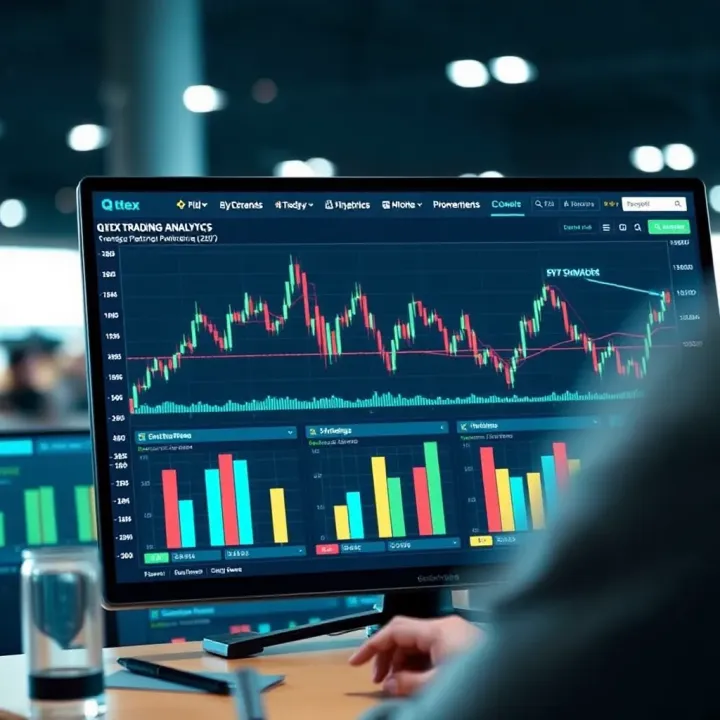
Explore Qutex trading basics & features 📈, learn methods & security 🔒, plus get practical tips for smart trading decisions in today's market.

📊 Explore QX trading essentials, tools, strategies, risks & regulations. Get practical tips tailored for traders in India's dynamic market landscape.
Based on 8 reviews