

Understanding Forex Demo Accounts for Traders
📊 Explore forex demo accounts as a safe space to build trading skills, understand markets, avoid mistakes, and smoothly shift to live trading with confidence.
Edited By
Isabella Morgan
Trading forex, or foreign exchange, involves buying and selling currencies to profit from price movements. For Indian traders looking to enter this dynamic market, understanding forex demo accounts is a crucial first step. These accounts offer a risk-free environment where you can learn the ropes without putting real money on the line.
A forex demo account replicates real trading conditions, providing virtual funds to trade with. This allows you to familiarise yourself with currency pairs like USD/INR or EUR/USD, practice placing orders, or test different trading platforms such as MetaTrader 4 or 5, all without any financial risk.

Forex demo accounts help you build confidence and sharpen your strategies before dealing with the complexities and pressures of live markets.
Skill Development: Demo accounts let you practice technical analysis and understand market indicators without pressure.
Strategy Testing: You can try various approaches, like scalping or swing trading, ensuring your techniques suit your risk appetite and trading style.
Platform Familiarisation: Indian traders get comfortable with functions like order types, stop losses, and chart tools on platforms supported by brokers regulated by the Securities and Exchange Board of India (SEBI).
Imagine you are testing a breakout strategy with USD/INR. With a demo account, you identify a resistance level at 75.50 and place a buy order just above it. If the price breaks out, you observe how the market reacts and how stop-loss orders protect your position, all without risking ₹1.
Using a demo account also prepares you for real-world conditions such as dealing with slippage or spreads that widen during volatile sessions — common in forex markets influenced by economic announcements or RBI policy changes.
Look for accounts from brokers offering INR-based accounts and access to local and global currency pairs.
Check that the demo platform simulates live market conditions accurately.
Consider brokers with strong customer support and transparent fee structures.
Starting with a demo account helps you transition smoothly from paper trading concepts to active forex investing, making it a smart choice in your trading journey.
A forex demo account is a practice trading platform that allows traders to experience forex trading without risking real money. For Indian traders, this is incredibly useful, especially when starting out. It offers hands-on experience and a chance to understand market dynamics, order placement, and trading software features before stepping into actual trading.
Difference between demo and live accounts: A demo account simulates real trading but uses virtual money instead of real funds. While the trading environment may appear identical—with access to real-time price feeds and market charts—the key difference lies in the absence of financial risk. For example, an Indian trader using ₹10 lakh in virtual funds on a demo account will neither lose nor gain actual money. This lets newcomers experiment and learn without anxiety.
How virtual funds operate: Virtual funds in demo accounts work exactly like real money but hold no monetary value. When you buy or sell a currency pair, the profit or loss updates your virtual balance accordingly. This setup helps traders understand leverage, margin requirements, and position sizing practically. However, since no real money is involved, one's emotional connection to trades differs significantly from live trading, which influences decision-making.
How to open a demo account with brokers: Opening a demo account is straightforward. Indian traders need to visit their chosen forex broker's website, where demo registration usually requires submitting basic details like name, email, and phone number. Once registered, you'll gain instant access to the demo trading platform. Brokers such as Zerodha, ICICI Direct, and others often offer this facility free of cost. This access helps you familiarise with their trading environment before committing real funds.
Common features available: Demo accounts typically come with features similar to live trading platforms. This includes real-time charts, various order types (market, limit, stop), and essential tools such as indicators and market news feeds. Some brokers provide additional resources like trading tutorials and strategy testing modules. For instance, MetaTrader 4 or 5 platforms frequently used by Indian traders offer a comprehensive demo experience, making the learning phase smooth and practical.
Using a demo account effectively gives you a risk-free arena to build and refine your trading skills, reducing costly mistakes when you move to live markets.
Understanding the ins and outs of forex demo accounts is the first step in becoming a confident trader in the Indian forex market.
Using a forex demo account offers clear benefits, especially for traders in India aiming to sharpen their skills without risking actual money. Demo accounts simulate the live market environment while providing a safety net, helping traders gain practical exposure and test ideas before stepping into real trading.
Practising order placement and trade execution allows beginners to familiarise themselves with buying and selling currencies. For instance, an Indian trader can learn how to place limit or stop-loss orders within the platform without worrying about losing money. This hands-on practice helps avoid costly errors when switching to live trading, where each order execution impacts the trader's capital.
Familiarity with trading platforms is equally vital. Demo accounts let users explore various broker platforms like MetaTrader 4, MetaTrader 5, or proprietary mobile apps at their own pace. Navigating tools such as charting features, technical indicators, and watchlists becomes easier when there's no pressure from real financial stakes. For example, by testing indicators popular in India like RSI or MACD on demo platforms, traders build the muscle memory needed to act fast in live markets.

Simulating different market scenarios is a key advantage. Demo accounts reflect price movements based on real-time or delayed data, allowing traders to assess how strategies perform during volatility spikes or trending phases. Think of an Indian trader testing a breakout strategy around major news events like RBI policy announcements, observing how price reacts without risking capital.
Optimising approaches before real investment builds a solid foundation. Traders can tweak entry and exit rules, stop-loss placements, or position sizes, evaluating profitability and risk metrics without stress. This methodical refinement ensures strategies align well with one’s risk appetite and market understanding, reducing emotional impulsiveness when actual money is at stake.
Learning money management rules in a demo environment teaches crucial habits. Indian traders can practise setting maximum loss limits per trade, managing leverage responsibly, or diversifying currency pairs without the fear of burning through their funds. These ingrained habits carry over to live trading, promoting long-term success.
Handling emotions in a risk-free environment helps develop discipline. Demo accounts expose traders to the psychological elements of trading—like dealing with losses or gains—without real financial consequences. For example, a trader testing strategies on INR/USD pairs during fluctuating sessions gains experience controlling fear or greed, which are common pitfalls once real money enters play.
Starting with a forex demo account helps Indian traders bridge the gap between theory and practice in a controlled setting, ultimately fostering better decision-making, confidence, and readiness for live forex trading.
This practical exposure, coupled with strategic testing and emotional preparation, makes demo accounts indispensable for anyone serious about forex trading in India.
Forex demo accounts provide an excellent platform to practise trading, but they come with distinct limitations that Indian traders need to keep in mind. Understanding these helps prevent misconceptions and prepares you better for live trading.
Lack of real market pressure
Trading on a demo account lacks the real pressure that comes with risking your own money. When no actual funds are involved, it's easier to take trades without much thought. In live markets, the fear of loss or pressure to book profits influences decisions heavily. For example, an Indian trader might place multiple risky trades on demo but hesitate during real trading due to the emotional weight.
This difference means demo trading often feels simpler, which may not reflect the real challenges. You might also find yourself taking bigger risks on demo than you would on a live account, which only sets unrealistic habits.
Potential discrepancies in execution speed
Demo accounts usually simulate market execution but can't fully replicate the speed and slippage of live orders. Indian traders using platforms like Zerodha or Upstox may notice faster or more consistent fills in demo than in their live accounts, especially during volatile market hours.
Such variations can impact your real trading outcomes. For instance, a strategy working smoothly on demo might suffer delays or price slippage live, affecting profitability. Thus, relying solely on demo fills without adjusting for live market latency might backfire.
Absence of actual money risk
Trading without risking real money means you don't truly experience the pain or reward of gains and losses. This often leads to overconfidence, with traders underestimating risks because losses affect only virtual funds.
For example, an Indian trader practising during the Diwali festival on a demo account might see impressive gains and expect similar results live, only to face unexpected losses. This disconnect between demo performance and live outcomes can result in poor money management.
Emotional detachment from trades
Without real stakes, emotional responses like anxiety, fear, and greed don’t manifest as strongly. This detachment might prevent you from learning how to handle stress, which plays a huge role in live trading.
If you close losing trades on demo without hesitation but hesitate on live trades, it points to this problem. Learning to manage emotions helps prevent impulsive decisions, and since demo trading cushions these feelings, it can leave you unprepared for live market pressures.
Using a demo account is valuable, but recognising its limits prepares you for the realities of live forex trading. Treat demo performance as a learning step, not a guaranteed preview of success.
By remembering these constraints, Indian traders can better use demo trading as a tool without falling into common pitfalls. Always combine demo practice with awareness of live market nuances and emotional challenges for a balanced trading education.
Using a forex demo account effectively can make all the difference when preparing for live trading. It offers a space to hone your skills, test strategies, and understand market behaviour without risking real money. To really gain from it, traders must treat the demo account with the same seriousness as actual trading.
Setting realistic goals and limits is crucial even in a demo environment. Many traders fall into the trap of chasing unreal profits without considering the risks involved. For example, if you aim to make 2% profit per week, stick to it during demo trading as well. This practice helps inculcate discipline and keeps your approach practical. Without limits, you risk developing habits that won’t hold up in live markets.
Respecting position sizing and risk is equally important. Demo accounts sometimes entice traders to open large positions since there is no real money at stake. However, doing so misleads your risk management skills. Suppose you practise risking 1% of your trading capital per trade; maintain the same in demo trades. This way, you'll build a strong habit that transfers seamlessly to live trading, guarding you against heavy losses.
Recording trades and results helps monitor progress and identify patterns. Keep a trading journal in which you note down entry, exit points, reasons for the trade, and outcomes. For instance, if your strategy works well during high volatility but falters otherwise, you can adjust accordingly. This record-keeping practice sharpens self-awareness and builds a foundation for continuous improvement.
Reviewing performance regularly is necessary to stay on track. Set aside time weekly or monthly to analyse your trade journal carefully. Look for consistent mistakes or behaviours, such as entering trades too early or ignoring stop losses. This reflection allows you to tweak your strategies and mental approach before risking real capital.
Monitoring psychological readiness is often overlooked but vital. The emotions involved in live trading — fear, greed, impatience — differ significantly from demo trading. Pay attention to how you handle wins and losses during the demo phase. If you notice impulsive trading or overconfidence, take a step back and work on emotional control until you’re comfortable managing stress.
Choosing appropriate brokers and platforms influences your live trading success. Test different brokers’ demo accounts focusing on execution speed, reliability, and user experience. For example, some Indian traders prefer platforms like Zerodha or ICICI Direct for their seamless interface and localised support. Finding a broker that suits your style reduces friction when you move to live trading.
Treat your demo account as if it were your real money — this mindset prepares you better for the real forex market.
Adopting these habits ensures that your demo trading experience fully prepares you for entering live forex markets with confidence and control.
Selecting the right forex broker is a key step for Indian traders testing the waters with demo accounts. The choice directly impacts the quality of your practice experience, including how well the demo platform mirrors live trading and the support you receive. Since forex trading involves real money once you're ready to go live, starting with a broker that suits your trading style and needs pays off.
The Securities and Exchange Board of India (SEBI) regulates the securities market but currently does not regulate forex brokers offering trading in international currency pairs directly to Indian residents. However, SEBI does regulate Indian-based forex trading platforms that comply with local laws, such as currency derivatives trading on recognised exchanges like NSE and BSE. When choosing a broker for demo trading, especially international ones, it is important to confirm if the broker complies with relevant regulations applicable in India or the broker’s jurisdiction. This ensures better security of funds and reduces the risk of fraud.
Dealing with authorised brokers ensures you are practising in an environment that reflects realistic trading conditions and safeguards. Brokers regulated by authorities such as the Financial Conduct Authority (FCA) in the UK or the Australian Securities and Investments Commission (ASIC) often maintain higher standards, which benefits demo users through reliable execution and trustworthy data. Avoid unregulated brokers offering flashy demo accounts without verified credentials, as this might lead to misleading trading simulations.
Broker platforms with both mobile and desktop versions offer flexibility for Indian traders. For example, while commuting in cities like Mumbai or Bengaluru, many prefer practising on mobile apps such as MetaTrader 4 or 5, which brokers commonly support. Desktop versions tend to provide more advanced charting tools and faster order execution, which is useful for detailed strategy testing. A broker offering seamless sync between devices can help you maintain consistent practice sessions.
The user interface should be intuitive and easy to navigate, even for demo users new to forex trading. Tools like technical indicators, economic calendars, and risk management features improve the learning curve and let you experiment with real-life trading techniques. Brokers such as Zerodha or ICICI Direct often include interactive charts with drawing tools and alert systems, enabling traders to simulate various scenarios and react to market movements effectively.
Support in local languages such as Hindi, Tamil, or Bengali can make a big difference, especially for freshers or traders from tier-2 and tier-3 cities. A good broker will offer multilingual customer service via chat, phone, or email, making it easier to resolve technical issues or clarify doubts quickly while practising.
Apart from simulation, educational content enhances learning. Brokers that provide structured training materials, video tutorials, and live webinars help demo account users build stronger foundational knowledge. For instance, ICICI Direct regularly hosts webinars covering market basics and trading psychology, which can complement your demo practice. These resources not only improve your skills but also prepare you mentally for the transition to live trading.
Selecting a well-regulated broker with accessible platforms and strong customer support creates an ideal environment for forex demo trading, helping Indian traders build confidence and skill without risking real money.
📊 Explore forex demo accounts as a safe space to build trading skills, understand markets, avoid mistakes, and smoothly shift to live trading with confidence.

📈 Learn how demo trading accounts let you practise forex trading risk-free, build skills, and transition confidently to live markets with smarter strategies.

Explore QX Broker's services, account options, platforms, and fees tailored for Indian traders 🇮🇳. Get insights on regulation & support to trade confidently📈.
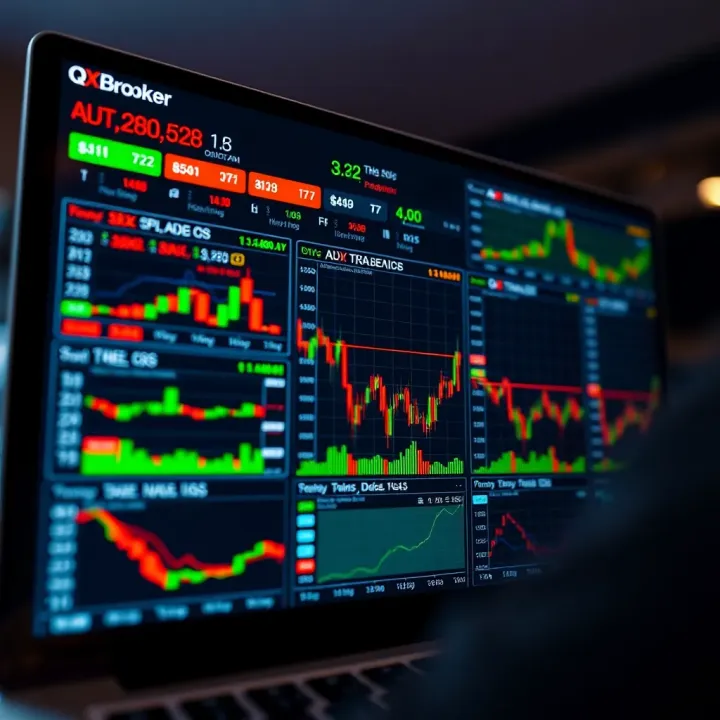
Explore the QXBroker app for Indian traders 📱: Learn about easy account setup, secure trading 🛡️, diverse instruments 📈, helpful tools & responsive support 🤝.
Based on 5 reviews